Government of Jamaica

JTEC Focussed On Internationalisation Of Tertiary Education Sector

Home / Archive by category "News"

JTEC Focussed On Internationalisation Of Tertiary Education Sector

The Jamaica Tertiary Education Commission (JTEC) is reviewing the United Nations Educational, Scientific and Cultural Organization’s (UNESCO) global and regional conventions with respect to the recognition of qualifications concerning higher education.

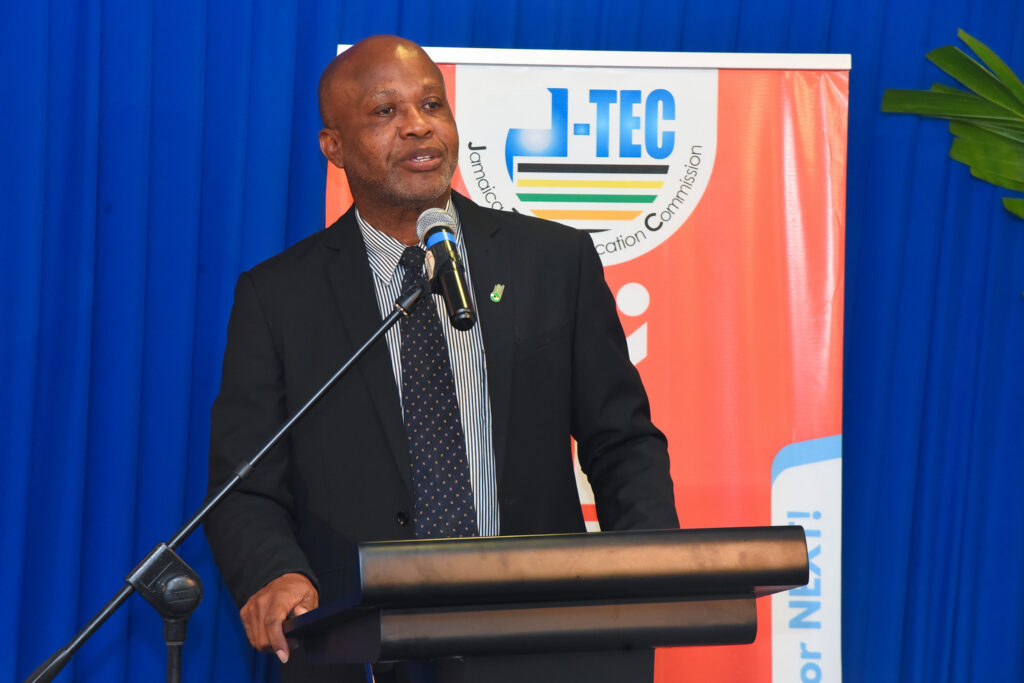
Commissioner/Chief Executive Officer of JTEC, Dr. Dameon Black, said the review is to assist in the “internationalisation” of the local tertiary education sector.

“When we speak to the internationalisation, it is not just about the whole matter of consuming, but also offering our educational products and services to others, inviting their citizens to [study] here, so that they might be able to receive of the quality that we have,” he said.

“We want to note that these two conventions, ratified, will assist us in terms of ensuring that the institutions here are able to facilitate and to move forward. We know and we have established quality, but sometimes, with the stamp of approval that these conventions have and how they tend to assist and facilitate, we’ll be able to better move forward,” he added.

Dr. Black was speaking at a Tertiary Education Forum on Friday (Nov. 22) at the Terra Nova Hotel in Kingston.

He said that JTEC is also working on the development of a national qualification system policy, which would enable persons to build on credits earned during their academic journey.

“We have had a history in Jamaica, where certain qualifications are esteemed higher than others. But what tends to happen when you have such a system is that many persons who have concluded other qualifications are not able to move forward or we have the situation where persons… may drop out at a particular point in time, they have nothing to show for it and they then have to restart,” Dr. Black outlined.

“One of the things that this will do is to facilitate the recognition of credits earned and so at whatever point in time in the system that you exit, you might then be able to build from that point,” he said.

He noted that initiatives through the National Qualifications Framework of Jamaica, as well as the Qualifications Registry of Jamaica, will significantly assist the commission in achieving that objective.

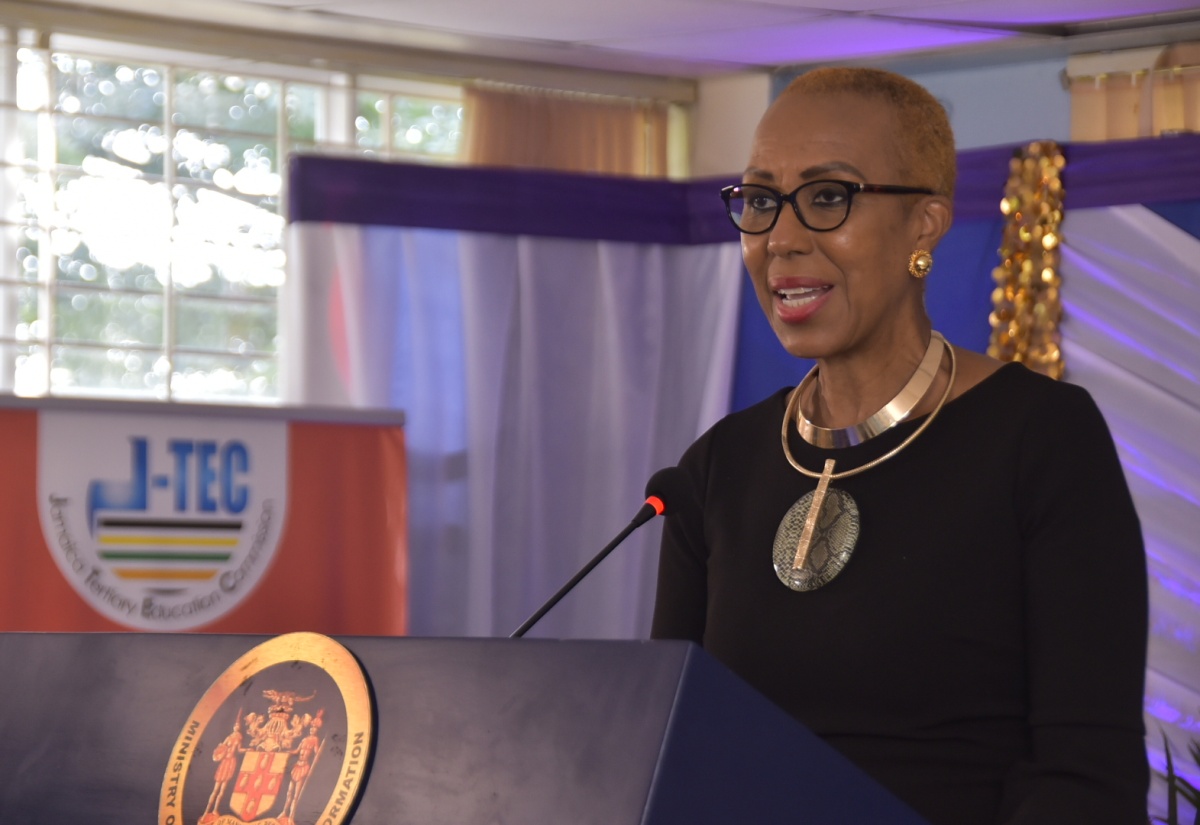
Permanent Secretary in the Ministry of Education, Skills, Youth and Information, Dr. Kasan Troupe, in her remarks, said “there is a massive job to do in making Jamaica globally competitive and that is what JTEC is about”.

“Part of doing that is the quality assurance, getting the regulatory framework in place so that our programmes can stand to scrutiny. We have signed on to international treaties and agreements and we work with UNESCO. So, we have agreed, with some understanding, that we must make sure that the system is cohesive and it is reflective of the national and global agendas,” Dr. Troupe said.

JTEC Certificate of Registration Presentation Ceremony

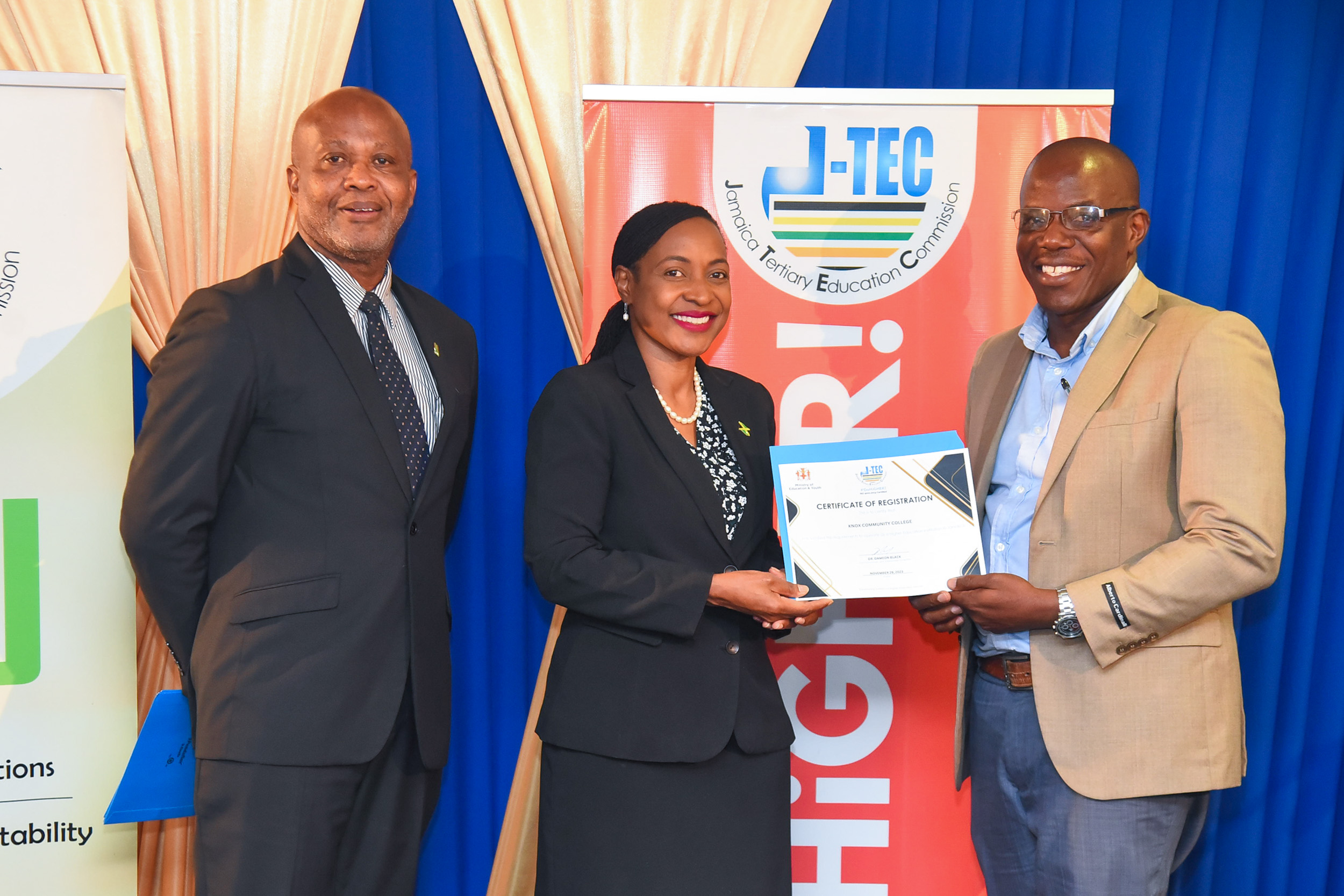
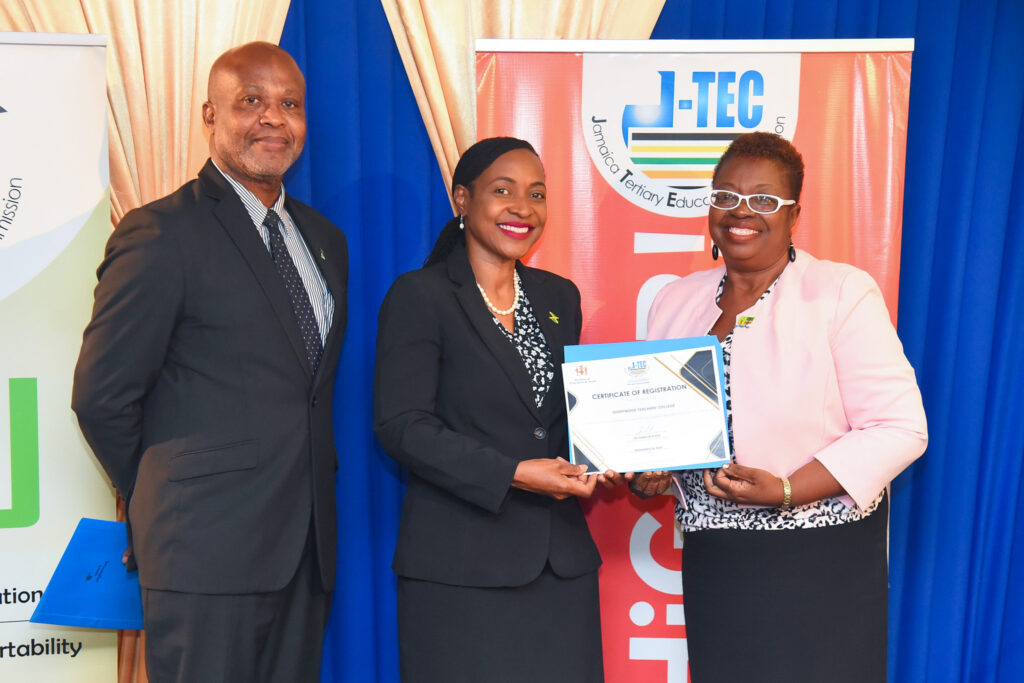
Minister of State in the Ministry of Education and Youth, Hon. Marsha Smith (centre), presents the Jamaica Tertiary Education Commission (J-TEC) Certificate of Registration, to Acting Principal of Shortwood Teachers’ College, Dr. Claudette Barrett March (right). Occasion was a ceremony for the award of certificates of registration to tertiary institutions on Wednesday (November 29), at the Courtleigh Hotel in New Kingston. Sharing in the presentation is J-TEC Commissioner and Executive Director, Dr. Dameon Black.
Minister of State in the Ministry of Education and Youth, Hon. Marsha Smith (centre), presents the Jamaica Tertiary Education Commission (JTEC) Certificate of Registration, to Acting Principal of Shortwood Teachers’ College, Dr. Claudette Barrett March (right). Occasion was a ceremony for the award of certificates of registration to tertiary institutions on Wednesday (November 29), at the Courtleigh Hotel in New Kingston. Sharing in the presentation is JTEC Commissioner and Executive Director, Dr. Dameon Black.
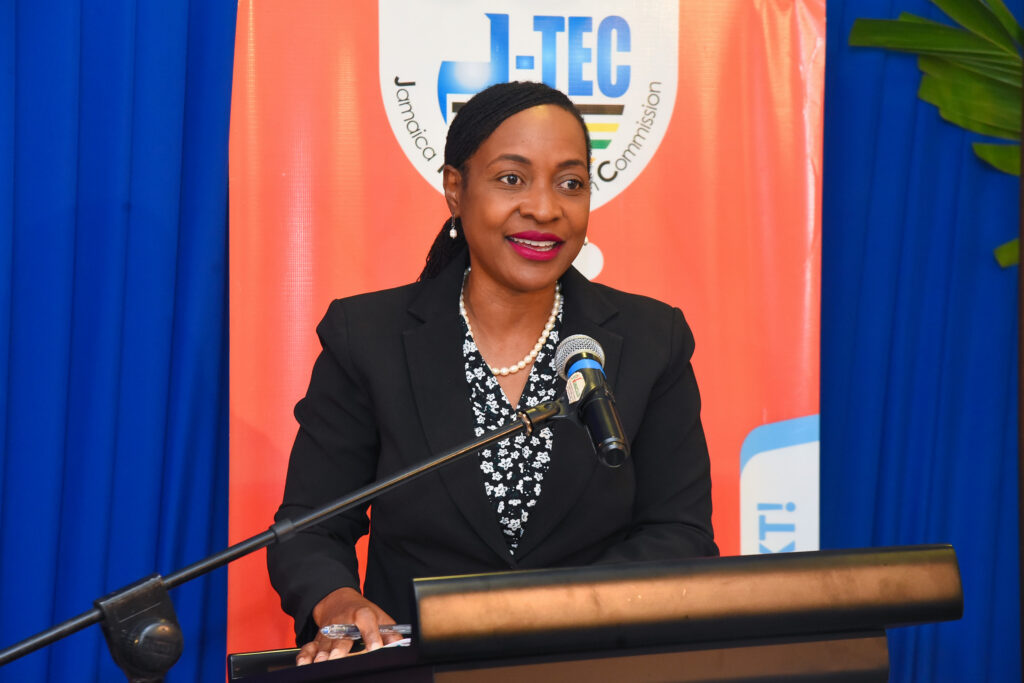
Minister of State in the Ministry of Education and Youth, Hon. Marsha Smith, delivers the keynote address during a ceremony for the presentation of certificates of registration to tertiary institutions, held on Wednesday (November 29) at the Courtleigh Hotel in New Kingston.
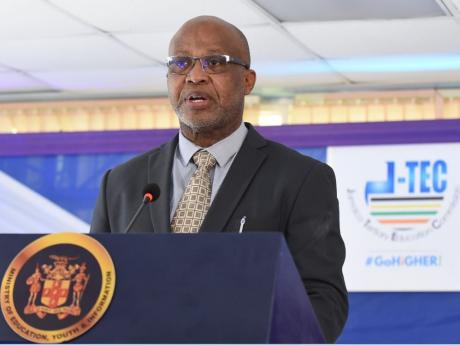
Commissioner and Executive Director of the Jamaica Tertiary Education Commission (J-TEC), Dr. Dameon Black, addresses a ceremony for the presentation of certificates of registration to tertiary institutions, held on Wednesday (November 29) at the Courtleigh Hotel in New Kingston.
Commissioner and Executive Director of the Jamaica Tertiary Education Commission (JTEC), Dr. Dameon Black, addresses a ceremony for the presentation of certificates of registration to tertiary institutions, held on Wednesday (November 29) at the Courtleigh Hotel in New Kingston.

11 Tertiary Institutions To Receive JTEC Certification

Eleven tertiary institutions that have satisfied the requirement for registration with the Jamaica Tertiary Education Commission (JTEC), will be presented with their certification at a Registration Conferral ceremony on November 17.

They are the St. James-based International Postgraduate Medical College; Church Teachers’ College, Manchester; Moneague College, Sigma College of Nursing and Applied Sciences, and Brown’s Town Community College in St. Ann; Caribbean School of Medical Sciences, Jamaica, Institute of International Recognised Qualifications, Institute of Nutrition and Wellness Studies, Media Technology Institute/Creative Production and Training Centre Limited, and SMTC Career Institute in Kingston; and Allied Health Care Institute of the Caribbean Limited in Clarendon .

Minister of Education, Youth and Information, Hon. Fayval Williams, is expected to deliver the keynote address at the event.

The Registration Conferral ceremony is part of activities for the inaugural celebration of JTEC Week from November 15 to 19, under the theme, ‘Developing Jamaica’s Higher Education Sector’.

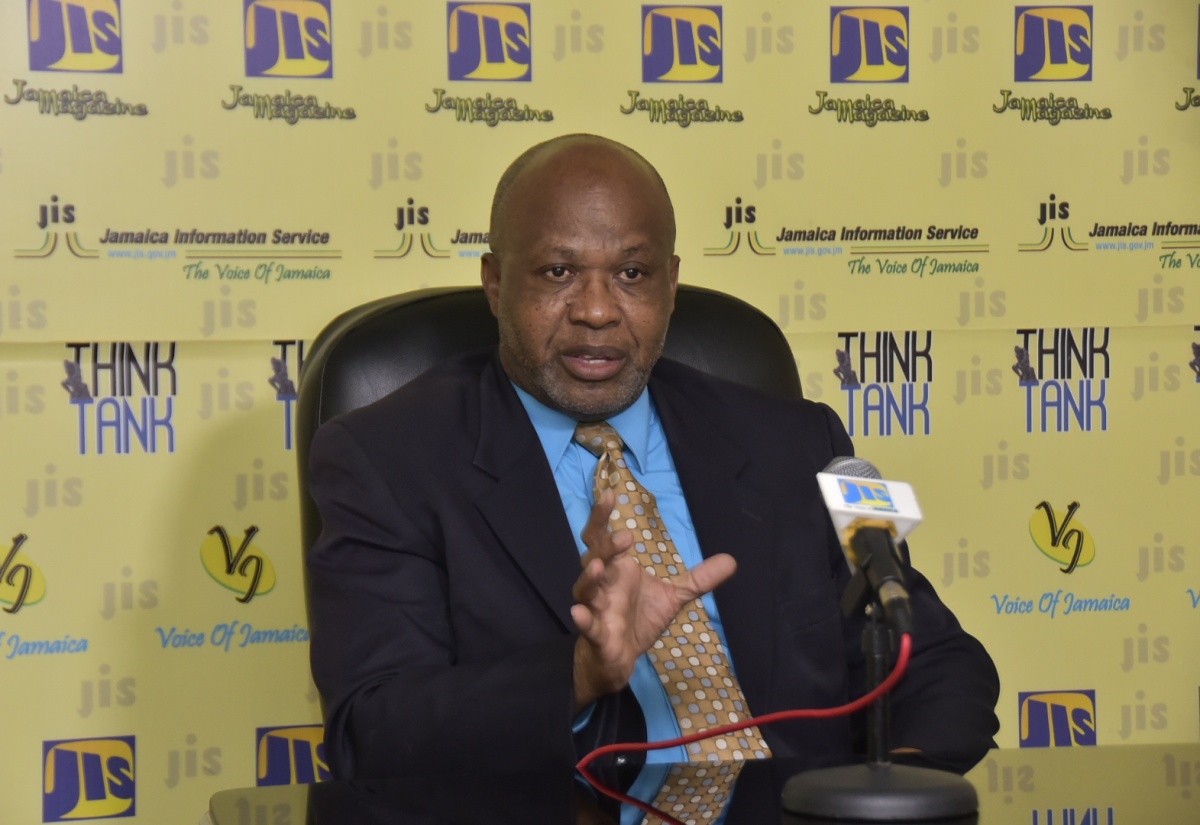
“Our mandate is to maintain a register of all levels of tertiary education institutions, whatever the level of programmes, whatever the nature of their activities, as long as they award tertiary-level qualifications,” said Commissioner of JTEC, Dr. Dameon Black.

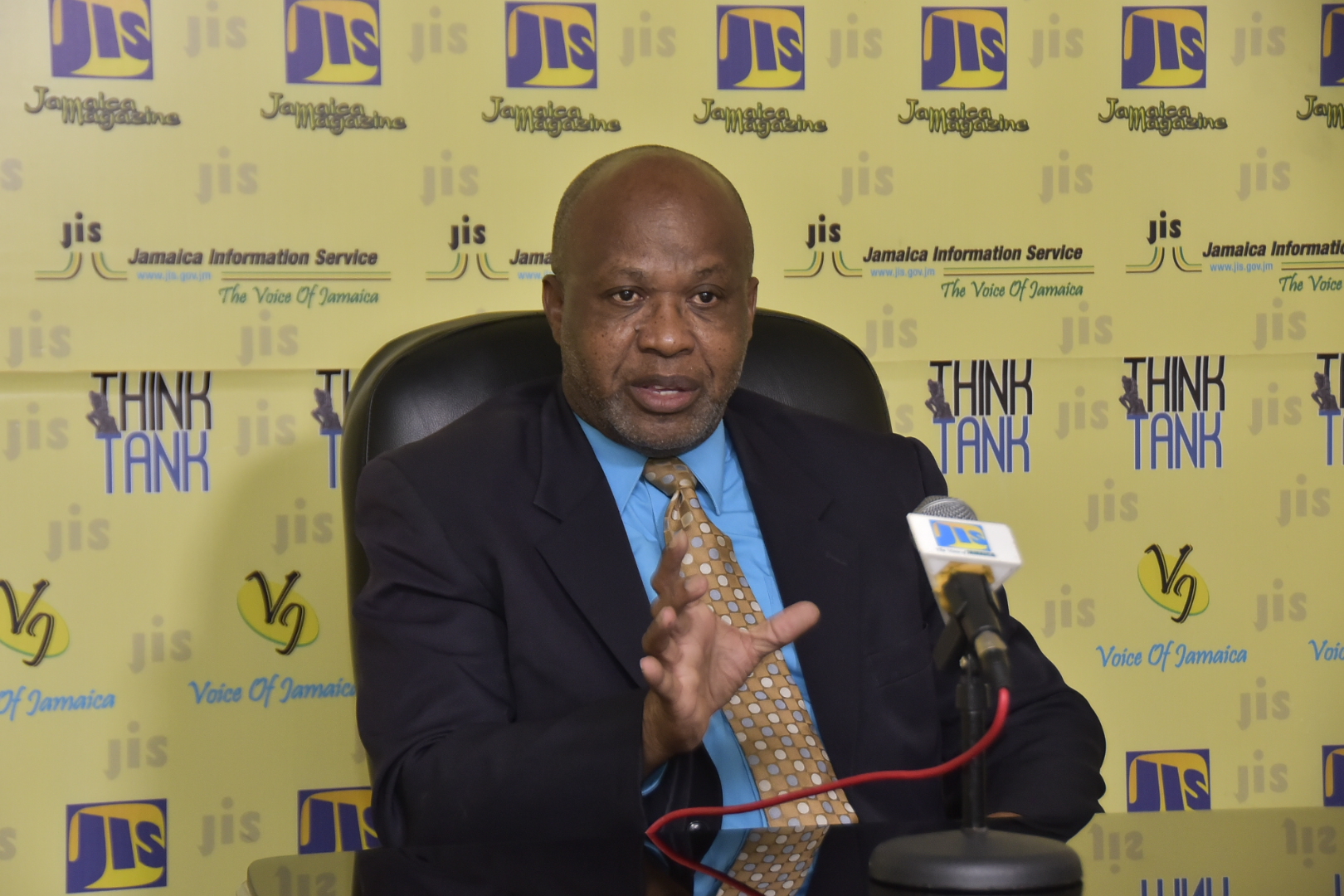
He was addressing a JIS Think Tank on November 16, to highlight the work of the entity and activities for JTEC Week.

“We want to share with our stakeholders what it is that the JTEC does. The activities are being used to acknowledge and affirm achievements and share the services that the Commission offers,” Dr. Black said, noting that the institution’s main functions are regulating, registering, and developing the tertiary education sector.

On Tuesday (November 16), the JTEC staged a symposium titled ‘Let’s Talk Flexible Learning Pathways’ to examine best practices in implementing such learning options in Jamaica; and a ‘Go Higher Education Experience’ aimed at increasing students’ awareness about issues such as financing higher education, preparing for college, money management and career and earning opportunities.

Activities for the week end on Thursday (November 18), with the staging of the inaugural research forum under the theme ‘Transformative Vision of Higher Education in Jamaica’.

Dr. Black told JIS News that during this forum, several speakers will address critical issues affecting higher education.

The main speaker will be Chief of UNESCO’s Higher Education Division, Dr. Peter Wells, who is a leading expert in the field.

All events are streamed on the Facebook and Instagram pages of JTEC and the Ministry of Education, Youth and Information and JTEC’s YouTube channel.

The original article can be found here.

Eleven tertiary establishments have joined the list of institutions registered with the Jamaica Tertiary Education Commission (JTEC), the regulatory and supervisory body for the tertiary sector.

At today’s registration conferral ceremony, JTEC commissioner, Dr Dameon Black, said it was a public demonstration of its faithfulness to its mandate, which is to register institutions across Jamaica. 

“One of the things that characterises Jamaica’s higher education space is the significant institutional diversity. Currently, we have on our register 147 entities that we monitor and that we are seeking to register, in keeping with our mandate,” Black said. 

On the submission of a registration application, institutions are checked for 11 standards and inspections are carried out before they are awarded certification. 

The standards are: legal status and regulation, philosophy and strategy, governance and accountability, financial viability and sustainability, academic programmes, quality and integrity, human resource requirements, student services, health and safety policies and procedures, physical and electronic resources and infrastructure, risk management and assessment and non-discrimination. 

Meanwhile, Minister of Education, Fayval Williams reasoned that JTEC’s mandate is to create an environment within which institutions can function sustainably and gain access to funding for sector-specific research that will enable them to further develop programmes that meet current and future needs of the workforce. 

“It is imperative that we establish and maintain rigorous national and institutional quality assurance standards in education. People entering educational institutions at all levels must have the confidence that the training offered is of the highest quality,” said Williams. 

Williams commended the institutions that were conferred with registration and urged others to make their applications. 

Institutions newly registered with JTEC: 

* The International Postgraduate Medical College 
* Church Teachers’ College
* Moneague College
* Sigma College of Nursing and Applied Sciences
* Brown’s Town Community College
* Caribbean School of Medical Sciences, Jamaica CSMSJ)
* Institute of International Recognized Qualifications (IIRQ)
* Institute of Nutrition and Wellness Studies (INWES)
* Media Technology Institute
* SMTC Career Institute
* Allied Healthcare Institute of the Caribbean Ltd.

Education Ministry Receives $365 Million For Scholarship Programme

The Ministry of Education and Youth has received approximately $365 million this fiscal year as budgetary support for its scholarship programme.

The programme provides a wide range of scholarship opportunities to students who are desirous of pursuing tertiary studies.

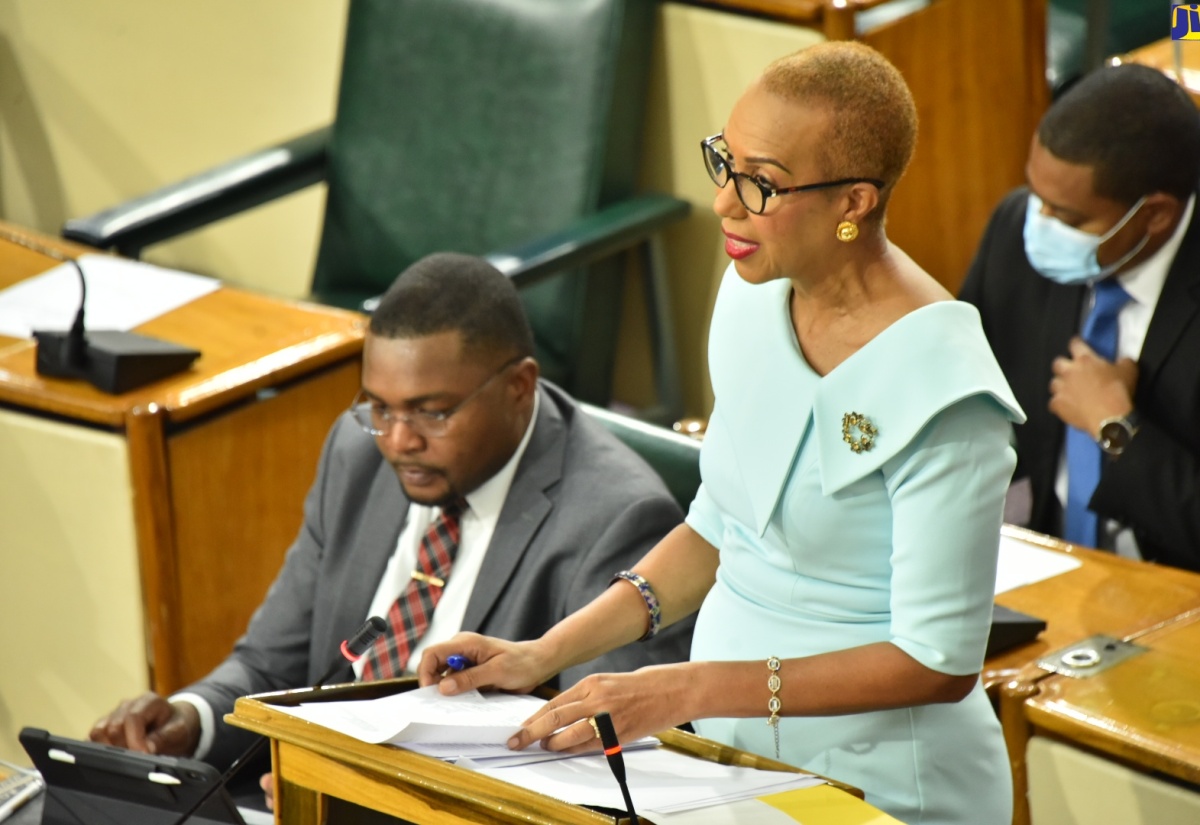
While delivering her sectoral presentation in the House of Representatives recently, Minister of Education and Youth, Hon, Fayval Williams, said that the Jamaica Tertiary Education Commission (JTEC) maintains two databases, which provide timely information, especially to students preparing for entry to tertiary education.

The Programme Tuition Fee (PTF) database has information on programmes of study, including costs, length/duration, modality and the qualifications awarded.

The PTF database allows users to have a simultaneous glance of programmes of study offered across a variety of institutions. The objective of the PTF is to increase access to information on tuition fees at the tertiary-education level.

Meanwhile, the Scholarship database provides details on scholarships as well as other financing options available to Jamaican students to study in Jamaica.

According to Minister Williams, there are also initiatives to develop teacher competencies and retain them in the system, which is important.

“The Ministry afforded scholarships in a number of subject areas to persons who have an interest in teaching,” she said.

Tuition funding is also available for tertiary students pursuing courses of study in education (STEM-related fields) under the Tertiary Students’ Assistance Programme, through scholarships.

Applications for the 2022/2023 Financial Year opened on April 1, 2022 and close in June 2022. Students may apply via the portal now hosted on the Ministry’s website.

In addition to scholarships, $180 million in funding is also available through grants and the Jamaica Values and Attitudes (JAMVAT) programme.

The JAMVAT programme is ‘voluntary/supported’ where, as part of contributing 200 hours of voluntary service, the Government will commit to fund up to $350,000 in tuition fees.

The Programme provides assistance to tertiary students who qualify for admission but are financially challenged to cover their tuition cost.

The original article can be found here.

Eleven Tertiary Institutions Receive Certification From JTEC

Eleven tertiary institutions were registered with the Jamaica Tertiary Education Commission (JTEC) and received certification during a Registration Conferral Ceremony held in Kingston today (November 17).

The certified institutions are: in St James – the International Postgraduate Medical College; in Manchester –  Church Teachers’ College; in St Ann – Moneague College; Sigma College of Nursing and Applied Sciences and Brown’s Town Community College; in Kingston – Caribbean School of Medical Sciences; Institute of International Recognised Qualifications; Institute of Nutrition and Wellness Studies, Media Technology Institute and SMTC Career Institute; and in Clarendon – Allied Health Care Institute of the Caribbean Limited.

In her remarks at the ceremony, Minister of Education, Youth and Information, the Hon. Fayval Williams, said that currently, 147 other tertiary institutions are certified to provide higher education across the island.

“These include universities, teacher training colleges, specialised training institutions, and vocational institutions that offer a variety of training and certification,” she said.

She also stated that it is important to maintain “rigorous national and institutional quality assurance standards in education, to ensure “confidence that the training offered is of the highest quality.s

“Governments are increasingly understanding that the entire educational system from early childhood through tertiary education must reflect the new social and economic needs of the global knowledge economy, which increasingly demands a better trained, more skilled and adaptable workforce. The imperative of implementing and maintaining quality assurance standards has therefore taken on added significance,” she further stated.

Meanwhile, Executive Director of JTEC Dr. Dameon Black, said the commission remains committed to implementing the “global benchmark standards and supporting processes and procedures.

“We certainly commit through the integrated higher education system to accommodate a network of multiple providers offering opportunities to pursue educational provisions, the diversity in study provisions among learners, and certainly the diversity of ownership and control of provisions,” he said.

JTEC is an agency of the Ministry of Education, Youth, and Information with responsibility for regulating the tertiary education sector through assessing, placing, registering qualifications, and developing policy.

The original article can be found here

JTEC Being Readied to Regulate and Transform Jamaica’s Tertiary Sector

JTEC being readied to regulate and transform Jamaica’s tertiary sector

Monday, September 29, 2014    

MAXINE Henry-Wilson yesterday assured Jamaicans that legislation has been drafted to regulate the tertiary education sector which has, in recent weeks, been a source of great concern for some graduates.

Henry-Wilson, a former education minister who is now CEO/commissioner of the emerging Jamaica Tertiary Education Commission (JTEC), also made clear that when JTEC is fully established, any institution offering tertiary education must register with the commission. “Failure to do so will attract sanctions, including closure,” she said, adding that the Government “has an obligation to protect the significant investment made in acquiring a tertiary level education”.

Following is the full text of Henry-Wilson’s article.

In recent weeks, several graduates of local tertiary institutions have been voicing their displeasure at the failure of some local tertiary institutions to award them degrees despite them completing their programmes of study.

The students have argued that the delay has prevented them from taking up job offers or has resulted in them being paid lower salaries.

The affected colleges and universities, in their bid to provide an explanation, have indicated that the situation stems from the fact that their degree programmes have not yet been accredited by the University Council of Jamaica (UCJ), the entity established to quality assure and accredit programmes offered by local degree-granting institutions.

In a recent newspaper article, executive director of the UCJ, Dr Yvonette Marshall described the UCJ as the external quality assurance body for tertiary education in Jamaica. As such, tertiary level institutions in Jamaica are expected to submit their programmes to the UCJ for evaluation against established standards and criteria.

A major issue that has featured in the discussions on the UCJ’s role as the external quality assurance body is the accreditation process and the fact that a programme of study cannot be evaluated for accreditation until it has completed a full cycle.

For an undergraduate degree this is usually a period of four years. Persons registered in these institutions frequently discover the latter’s status only after completing the programme of study and after being told that the respective institution is awaiting the UCJ’s stamp of approval.

The Jamaica Tertiary Education Commission

The Jamaica Tertiary Education Commission (JTEC) is being established under the Education System Transformation Programme (ESTP) and will be empowered under law to regulate, standardise, safeguard and transform Jamaica’s tertiary education sector.

Once fully established, JTEC will ensure mandatory registration of all institutions operating at the tertiary level in Jamaica. It will also prescribe and monitor minimum standards of programme delivery.

JTEC’s authority will extend to offshore or franchised offerings which may have full accreditation in their country of origin but which must have a permit to operate prior to offering any programme of study in Jamaica.

JTEC’s empowering legislation will give it the right to register and licence institutions as well as support the strengthening of internal quality assurance and registration of tertiary level institutions. In addition, JTEC will be granted the authority to ensure the maintenance of academic integrity through identification and monitoring of practices within tertiary level institutions.

JTEC will be mandated to advise the minister of education on matters relating to tertiary education. It will, therefore, be both a regulatory and developmental entity for the tertiary sector.

Under temporary measures to be granted to JTEC, institutions will be required to provide detailed information on their internal quality assurance mechanisms and practices. Having satisfied these requirements, institutions will then be fully registered. If a college or university falls below the threshold required to operate as a tertiary body, its permit could be withdrawn.

Process of Registration and Consequence of Non-Compliance

Any institution proposing to offer tertiary level education in Jamaica must indicate this to JTEC through a letter of intent, providing full information required for application, including its governance structure, financial viability, alignment of academic staff with programmes being offered, availability of appropriate infrastructure and other support, for example, library and computer facilities, in order to obtain a permit to operate.

As a condition of registration, the applicant must register as a business with the Registrar of Companies, and must have an appropriate nomenclature, for example University College, College, or University. The designation will depend on the nature, content and level of courses. The institution will also need to satisfy JTEC that it has an acceptable credential-granting platform.

The process of registration will ensure the attainment of minimum academic and operating standards. Should there be gaps in the standards under which an institution is to operate, it will be given time to effect remedies. It should be emphasised that the standards being applied will be consistent with global requirements, given the nature of tertiary education and the increasing demand for recognition of credentials beyond the shores in which they have been granted.

Student Services – A Priority

One of the major mandates of entities that regulate the tertiary education sector in other countries is that of enforcing robust student service requirements, with emphasis on clear, adequate and timely information to applicants, provision of time-bound responses to student enquires, organised and transparent student records and academic counselling.

The integrity of marketing documents of tertiary institutions is constantly under scrutiny with severe sanctions for misinformation and for violations in service provisions.

JTEC will be establishing comparable systems and will not only be a source of data on these matters but will provide information and possible avenues of recourse for violations of standards relating to student affairs.

The thrust is to build and maintain a database of the entire spectrum of approved tertiary institutions in the country.

JTEC will serve as the gatekeeper by regulating entry into the tertiary sector, ensuring that institutions meet the minimum governance standards and academic requirements in order to get a permit to operate.

The UCJ, on the other hand, will be the external accreditation agency, assessing standards at least four years after the programme is introduced. UCJ accredits on the evidence of the quality of the graduate. External accreditation will be voluntary, but registration with JTEC will be mandatory and an institution’s failure to do so will attract sanctions, including closure.

Monitoring of these institutions based on standards will be continuous and of paramount importance to JTEC’s mandate to protect the public’s interest. Tertiary education is still the avenue of social mobility for the majority of Jamaicans. Therefore, the Government has an obligation to protect the significant investment made in acquiring a tertiary level education.

Draft legislation relating to the establishment of JTEC is with the Chief Parliamentary Counsel and is expected to be tabled in the Houses of Parliament this legislative year.